Discover the Path to Stronger, Pain-Free Feet and Ankles
Our feet and ankles are the unsung heroes of our mobility, supporting us day in and day out. However, when foot and ankle problems arise, they can significantly impact our quality of life. At Albanese Physical Therapy, our physical therapists play a crucial role in addressing these issues, helping individuals regain mobility and reduce discomfort.
Read on to learn more about common foot and ankle problems, preventative strategies, and how our physical therapists can make a difference in your journey towards better foot and ankle health.


Common Foot and Ankle Problems
Foot and ankle pain can affect our everyday lives and happens to many of us. It might be because we use our feet a lot, get injured, or have some health issues. Let’s talk about what usually makes our feet and ankles hurt and how we can do something about it.
- Plantar Fasciitis: Plantar fasciitis is characterized by pain in the heel, especially in the morning or after prolonged sitting. Strengthening the calf muscles can help alleviate the strain on the plantar fascia. Wearing supportive shoes with proper arch support, maintaining a healthy weight, and avoiding excessive high-impact activities are essential preventive measures.
- Achilles Tendinitis: Achilles tendinitis occurs when the Achilles tendon, the large tendon at the back of your ankle, becomes inflamed. This can result in pain and stiffness in the back of the ankle. Incorporating calf-strengthening exercises, gradually increasing exercise intensity, and wearing appropriate footwear can help reduce the risk of Achilles tendinitis.
- Ankle Sprains: Ankle sprains are common injuries caused by overstretching or tearing the ligaments around the ankle joint. They often lead to pain, swelling, and instability. Practicing balance and proprioception exercises can enhance ankle stability.
- Bunions: Bunions are bony bumps that develop at the base of the big toe, causing pain and deformity. They are often aggravated by wearing ill-fitting shoes. Choosing shoes with a wide toe box that allows proper spacing for the toes is essential. Avoiding high heels and considering orthotic devices for added support can alleviate bunion-related discomfort.
- Flat Feet (Pes Planus): Flat feet result from a lack of arch support, leading to discomfort and instability. This condition can impact walking and overall foot function. Strengthening the muscles in your feet and arches through specific exercises can provide better support. Additionally, using orthotic insoles in your shoes can help maintain arch height.

The Role of Albanese Physical Therapy In Your Recovery
Our highly skilled physical therapists are experts in assessing and addressing foot and ankle problems. We can play a vital role in your journey towards better foot and ankle health by conducting comprehensive evaluations.
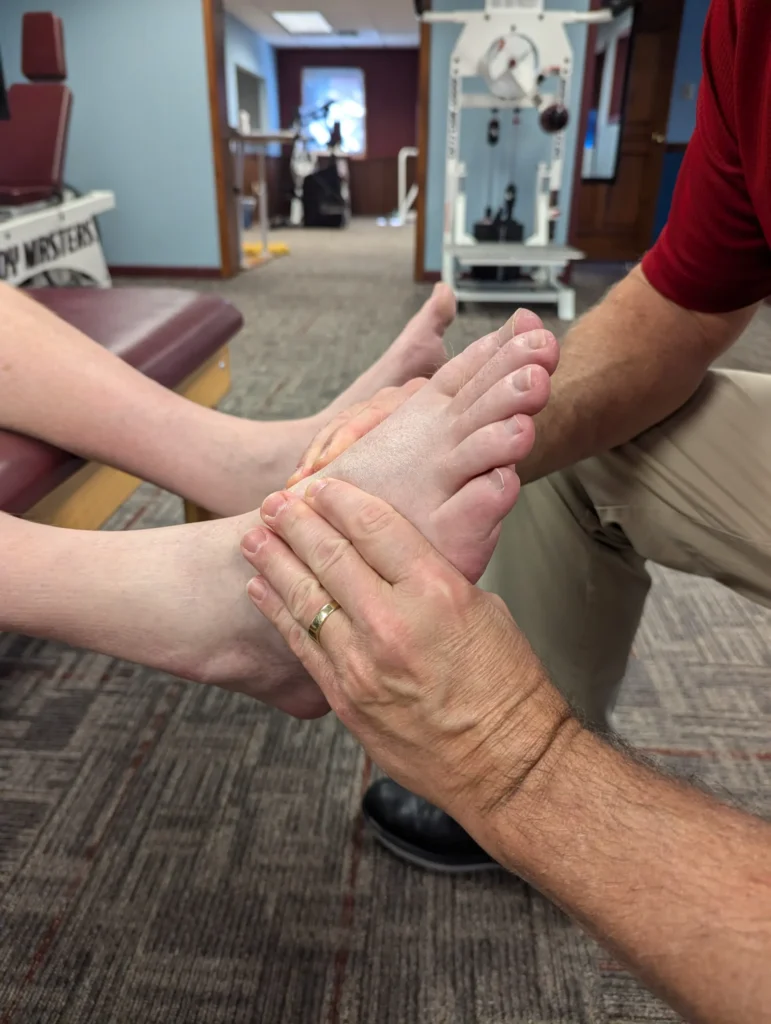
These evaluations involve:
- Strength and Range of Motion Testing: We’ll assess the strength of your foot and ankle muscles and evaluate joint mobility.
- Assessment of Gait and Movement Patterns: Our physical therapists analyze your walking and movement patterns to identify any abnormalities or areas of concern.
- Functional Testing: Your physical therapist may perform functional tests to determine how well your feet and ankles perform various activities.
Based on the evaluation findings, we’ll develop a personalized treatment plan tailored to your individual needs. This plan may include:
- Targeted Exercises: Stretching and strengthening exercises targeting the foot and ankle muscles are effective in helping to manage most foot and ankle issues.
- Manual Therapy Techniques: Manual therapy techniques, including joint mobilizations and soft tissue work, can reduce pain and improve ankle and foot mobility.
- Gait Activities: Gait activities are instrumental in addressing any abnormal walking patterns and gait disturbances in individuals with foot and ankle problems.
- Neuromuscular Reeducation: We often use neuromuscular reeducation techniques to improve proprioception and balance in individuals with ankle instability.
- Functional Training: Functional training is used to mimic real-life movements and is essential in restoring functional abilities and preventing recurrent injuries.
Our team is highly skilled at identifying and educating our patients about proper footwear, self-care techniques, and injury prevention strategies, an essential aspect of physical therapy. Education enhances patient compliance and promotes better long-term outcomes.
Stephanie was so kind, compassionate, & knowledgeable. She was a good teacher for my continuing exercises at home.
– Google 5-Star Review
Empower Your Feet and Ankles Today
Don’t let discomfort or limitations hold you back. Call Albanese Physical Therapy and let one of our skilled therapists guide you to healthier, pain-free feet and ankles. Your well-being is worth every step of the way!

Feel Better by Eating Better!
Vegan Peanut Butter Cookies
- 1 cup creamy natural peanut butter
- 1/2 cup maple syrup, or honey
- 1 teaspoon vanilla
- 1 cup almond flour
- flaked sea salt for topping, if desired
Preheat oven to 350 degrees F and line a baking sheet with parchment paper. Add peanut butter, maple syrup, and vanilla into a mixing bowl. Once combined, add in almond flour and stir until incorporated. Use a medium cookie scoop to scoop dough onto a prepared baking sheet. Alternatively, you can scoop the dough with a spoon and roll it into a ball. Flatten each dough ball with a fork, making a crisscross pattern, and sprinkle a little flaked sea salt on top of each cookie. Bake in a preheated oven for about 12 minutes or until cookies begin to brown. Remove from oven, allow cookies to cool on a wire rack, and enjoy.
Questions for Rich
Can I do physical therapy exercises at home?
We actually encourage most patients to keep their treatment going at home! Your physical therapist will likely provide you with a home experience program (HEP) with exercises tailored to your needs and abilities. HEPs help maximize your in-clinic treatment so you see the best results.
Making New Year’s Resolutions? We Can Help You Keep Them
Setting New Year’s resolutions is a time-honored tradition this time of year, but how many of us will still stick to those resolutions come June–or even February? Firm statistics on the success of New Year’s resolutions are hard to come by, but one study found that 45% of people surveyed felt their resolutions were unsuccessful one year out.
Don’t despair. There are ways to ensure your resolutions are successful, especially if they’re health- and fitness-related, as the vast majority are. In fact, one of the most popular New Year’s resolutions is to exercise more–and that’s one habit Albanese Physical Therapy can definitely help you develop!
Physical therapists are movement experts who understand the importance of regular exercise–not just on your appearance, but on your overall health. And if you’re going to make just one resolution, exercising more is a great one! Regular exercise has a radiating effect that impacts your mental health, sleep quality, joint pain levels, mobility, and so much more.
How Physical Therapy Will Keep You Moving All Year Long
One of the biggest challenges in starting a new exercise program is having no idea what to do. Joining a gym is most people’s first step, but it’s also an intimidating maze of unfamiliar equipment and wall-to-wall mirrors. Our therapists will help you develop an exercise program that suits your needs, interests, and ability levels–eliminating that initial hurdle.
Another trick to keep you moving is to track your progress. While many people default to monitoring their weight or appearance, our therapists can provide other measures to give you a complete picture of your overall health and wellness. Range of motion, balance, and strength: all paint a comprehensive portrait of your overall progress.
Knock This Resolution Out of the Park!
Make 2025 the year you stick by your resolution! With the Albanese Physical Therapy team in your corner, you’ll build an exercise habit for life.